
Build the maintenance baseline
List each asset, its current hour reading, and the equipment manufacturer's required maintenance intervals. Record the most recent completed service and calculate the next due reading for each task.
Different tasks may have different intervals. Oil, filters, lubrication, belts, cooling systems, fasteners, and safety inspections should follow the applicable equipment manual rather than a generic schedule.
Use a repeatable inspection routine
Check the hour reading at a consistent event such as daily inspection, rental return, weekly fleet review, or operator handover. Compare the reading with the next due value and plan workshop time before the interval is exceeded.
- Asset identity and hour reading
- Date and person recording the value
- Completed work and next service due
- Faults or unusual operating conditions
Combine hours with condition checks
Runtime is one maintenance input, not a replacement for inspection. Dust, heat, overload, moisture, storage, and severe duty can require earlier action. Follow the machine maker's instructions and use condition findings to adjust planning.
Keep the hour meter installation reliable
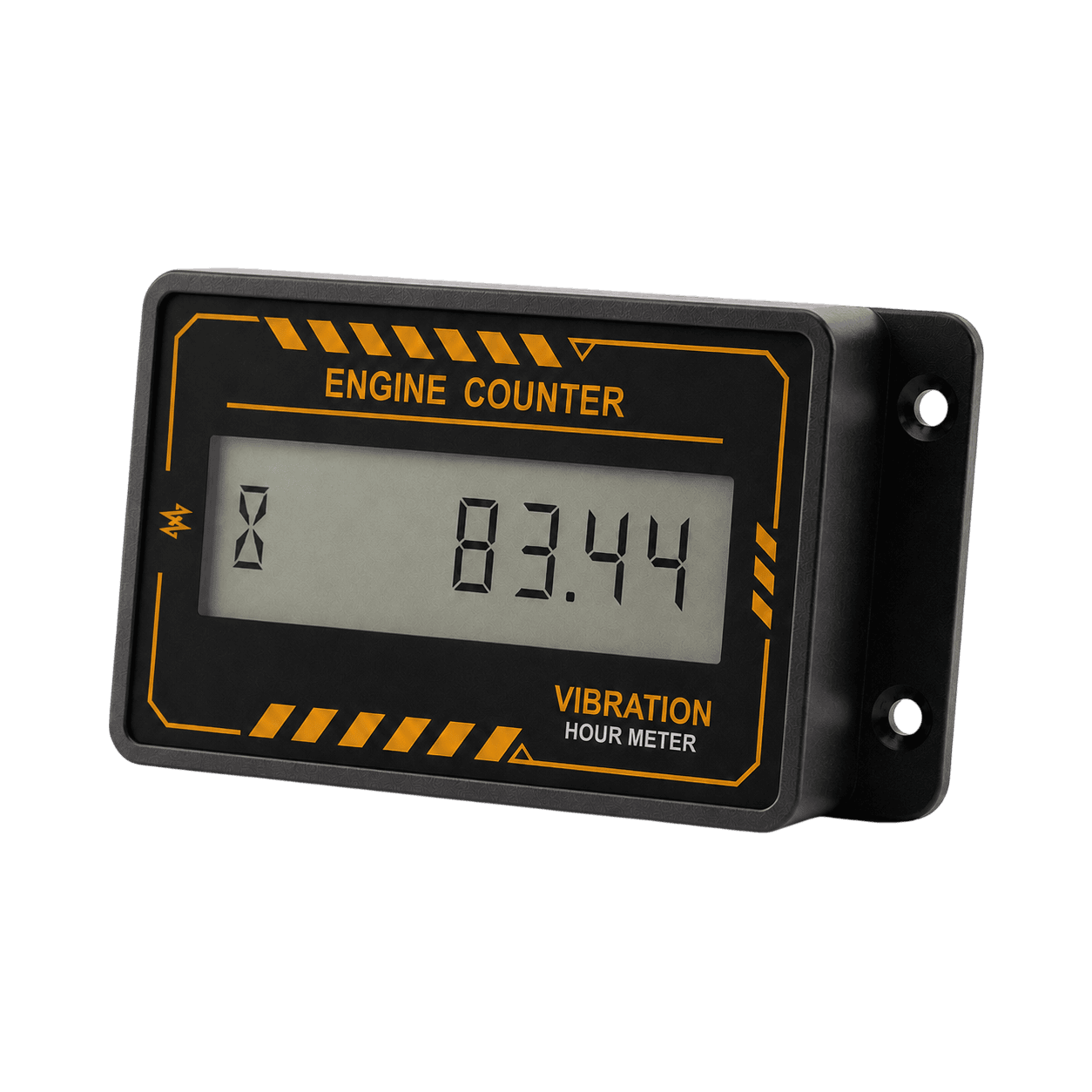
Inspect Xhour mounting during equipment checks. Confirm that the enclosure remains secure and that the chosen surface still transfers normal operating vibration after repair, panel replacement, or machine modification.